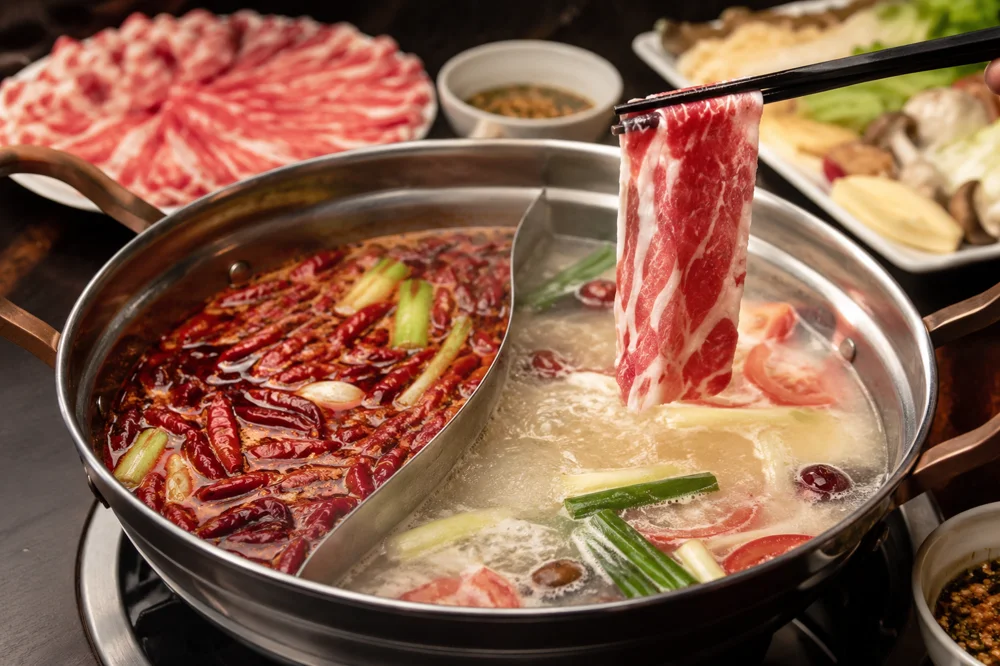
Tracking hot pot is hard because the meal does not belong to one person. The pot sits in the middle of the table, everyone adds food over time, and your portion is the beef, tofu, greens, noodles, broth, and sauce you actually ate.
Most nutrition tracking works best when there is a clean assumption: one person, one plate, one fixed meal. Hot pot breaks that assumption from the first ladle. A good tracker has to understand the shared table first, then help you narrow the meal down to your share.
Why hot pot breaks normal nutrition tracking
A sandwich is easy for a calorie tracker. So is a salad bowl, a packaged snack, or a plated dinner where everything on the plate belongs to you. The app can treat the photo, barcode, or database entry as your meal.
Hot pot is different in almost every way that matters.
The food starts raw. It cooks in batches. People add ingredients throughout the meal. One person eats more beef, another eats more tofu, someone else mostly takes mushrooms and greens. The same pot might hold noodles for five minutes, fish balls for twenty, and broth that changes as ingredients cook.
A single photo of the table can answer one question: what kind of meal is this? It cannot answer the more important question: what did you eat?
That is the limitation of most nutrition trackers. They can work reasonably well when the meal is already separated for one person. They struggle when the meal is shared, changing, and built from many small choices across an hour.
Start with the table, then narrow to your share
The practical way to log hot pot is not to chase a false exact number. Start with the shared meal, then reduce it to your portion.
First, identify the main categories on the table:
- Broth
- Thin sliced meat
- Seafood or fish balls
- Tofu and soy products
- Mushrooms and vegetables
- Noodles, rice cakes, or dumplings
- Dipping sauce
- Drinks or desserts
Then estimate your share of each category. You do not need to remember every chopstick movement. You need enough structure to avoid logging the whole table as if you ate it alone.
For example, if four people shared the pot and everyone ate roughly evenly, a quarter of the shared ingredients is a reasonable starting point. If you know you ate most of the beef and skipped the noodles, adjust those items instead of accepting the equal split.
That is the key shift: the table is shared, but the log should be personal.
Separate broth from ingredients
Hot pot broth can be confusing because it looks like the whole meal, but most of the calories usually come from what goes into it.
A light clear broth might contribute relatively little if you only sip a small amount. A spicy oil broth, coconut based broth, or rich soup base can matter much more, especially if you drink it or it clings heavily to food. The right move is to treat broth as its own item instead of letting it blur the rest of the meal.
Ask two quick questions:
Did you drink the broth, or mostly cook food in it?
Was the broth clear and light, or rich, oily, creamy, or heavily seasoned?
If you mostly used the broth for cooking, log a small serving. If you drank a full bowl of rich broth, log it as part of the meal. This keeps the estimate closer to what happened without pretending the app can see inside the pot.
Count the high impact items first
Hot pot has dozens of possible ingredients, but they do not all matter equally. Start with the items that move the estimate most.
Thin sliced beef, lamb, pork belly, meatballs, fish balls, dumplings, noodles, rice cakes, and fried tofu usually matter more than bok choy, cabbage, mushrooms, or herbs. Vegetables still belong in the log, but they should not take all your attention if the main uncertainty is whether you ate eight slices of beef or twenty.
A useful hot pot estimate might look like this:
| Item | Better question than "how much was on the table?" |
|---|---|
| Beef slices | How many slices did I eat? |
| Fish balls | How many pieces did I take? |
| Tofu | Did I eat a few cubes or a full portion? |
| Noodles | Did I skip them, share them, or eat a bowl? |
| Vegetables | Did I eat a light handful or several servings? |
| Sauce | Did I dip lightly or use several spoonfuls? |
If you can answer those questions, your log is already better than a generic "hot pot" entry.
Do not forget the sauce
Dipping sauce is easy to miss because it sits beside the meal, not inside the pot. It can still change the estimate.
Sesame paste, peanut sauce, chili oil, satay sauce, soy sauce mixtures, garlic oil, and sweet sauces do very different things nutritionally. A teaspoon used across the meal is not the same as a small bowl refilled twice.
Log sauce separately when it is more than a light dip. This is especially useful because sauce is personal. Four people can share the same pot and eat completely different sauce portions.
Where AI photo tracking helps
AI can help with hot pot when it is used for the right job.
It can identify that the meal is hot pot. It can recognize visible ingredients: beef slices, tofu, mushrooms, leafy greens, fish balls, noodles, and sauce bowls. It can give you a structured starting point instead of making you search for each item by hand.
What it cannot do from one table photo is know which pieces ended up in your bowl. It cannot know whether you ate the last noodle bundle, skipped the pork belly, or drank the broth.
That is why the best experience is not "take a photo and trust the number." It is "take a photo, get an estimate, split the shared dish, and adjust what you actually ate."
This is also why the broader AI nutrition category struggles with shared meals. In a 2024 University of Sydney study, AI nutrition apps overestimated beef pho calories by 49 percent and underestimated pearl milk tea by up to 76 percent. The study was not about hot pot specifically, but it shows the same pattern: current tools have trouble with foods that fall outside the clean assumptions about individual plates that many trackers were built around.
How Before I Bite approaches hot pot
Before I Bite is built around the shared table problem instead of treating it as an edge case.
The goal is to make tracking as seamless as possible at the moment you are actually eating. Scan the table, get an AI estimate, split the shared dish, and adjust your portion without starting over.
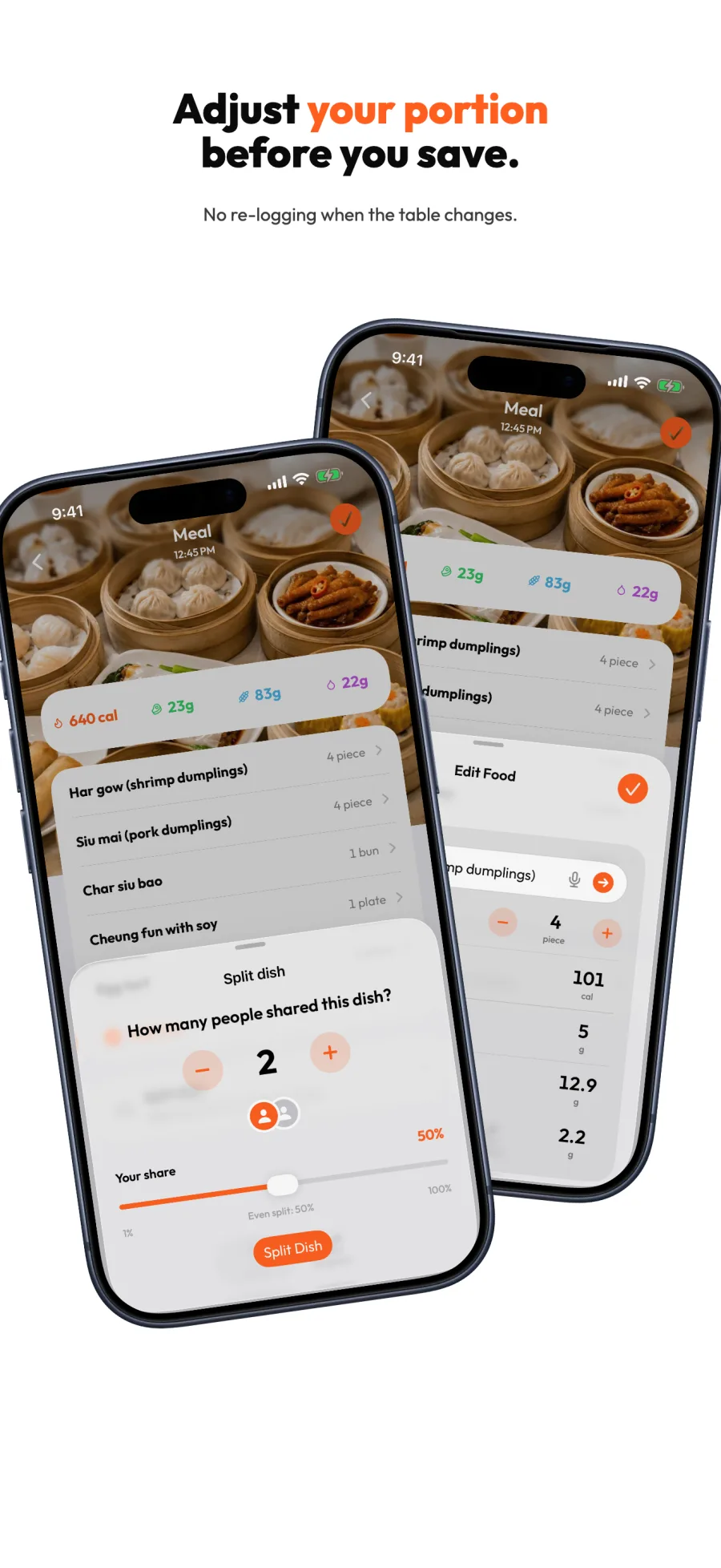
For hot pot, that means the app should help you move through the meal in the order a real person thinks about it:
- Recognize the meal as hot pot.
- Identify the visible ingredients.
- Ask how many people shared the meal.
- Start with an equal split when that is reasonable.
- Let you increase or decrease the items you personally ate.
- Save the meal without rebuilding it from scratch.
The app should not pretend it knows every bite. It should reduce the work between a rough table estimate and a useful personal log.
Shared meals need a tracker that makes the estimate easy to correct, not one that acts certain when it is guessing.
A simple hot pot logging flow
If you are tracking hot pot today, use this flow.
Take one photo before the meal starts, when the ingredients are still visible. If more food arrives later, take another photo or add the extra items manually.
Start with the number of people sharing. If four people shared the table, use one quarter as the default only for items people ate evenly.
Adjust the main proteins. Increase beef, lamb, pork belly, fish balls, tofu, or seafood if you know you ate more than your share. Decrease them if someone else took most of them.
Handle noodles and dumplings separately. These are easy to overcount if the app spreads them evenly across everyone. If you skipped the noodles, remove them. If you ate a full bowl, add them.
Add your sauce. Estimate the type and amount. A light soy dip is different from several spoonfuls of sesame paste or chili oil.
Decide whether broth mattered. If you drank a bowl, log it. If you only cooked food in it, keep it small.
Save the meal, then move on. A useful estimate is better than abandoning the log because the shared table was too much work.
What to avoid
Do not log the entire pot as your meal. That is the most common overcount.
Do not accept a generic "mixed soup" entry if it ignores the proteins, noodles, or sauce that made up most of what you ate.
Do not spend ten minutes trying to reconstruct every bite. The goal is a practical personal estimate, not a forensic report.
Do not let the app shame the meal into something it was not. Hot pot is a shared meal. Shared meals need a different workflow.
The point of tracking shared food
People do not stop eating hot pot, mezze, thali, dim sum, tapas, Korean BBQ, or family style dinners because a calorie tracker was built for solo plates. They stop tracking, or they invent a simpler meal in the app and move on.
Before I Bite attempts to close that gap. It starts from the way the table actually works: shared dishes, uneven portions, sauce on the side, and ingredients that change across the meal.
No AI tracker can know your exact hot pot portion from one photo. The better question is whether it gives you a fast, honest way to turn the shared table into your own log.
Want a tracker built for hot pot, thali, mezze, and family style meals? Join the waitlist.
Read next: AI calorie apps have a shared meal problem.